
A pea-leasing time
The summer's first peas are here, grown using John Innes and the memories of my grandad

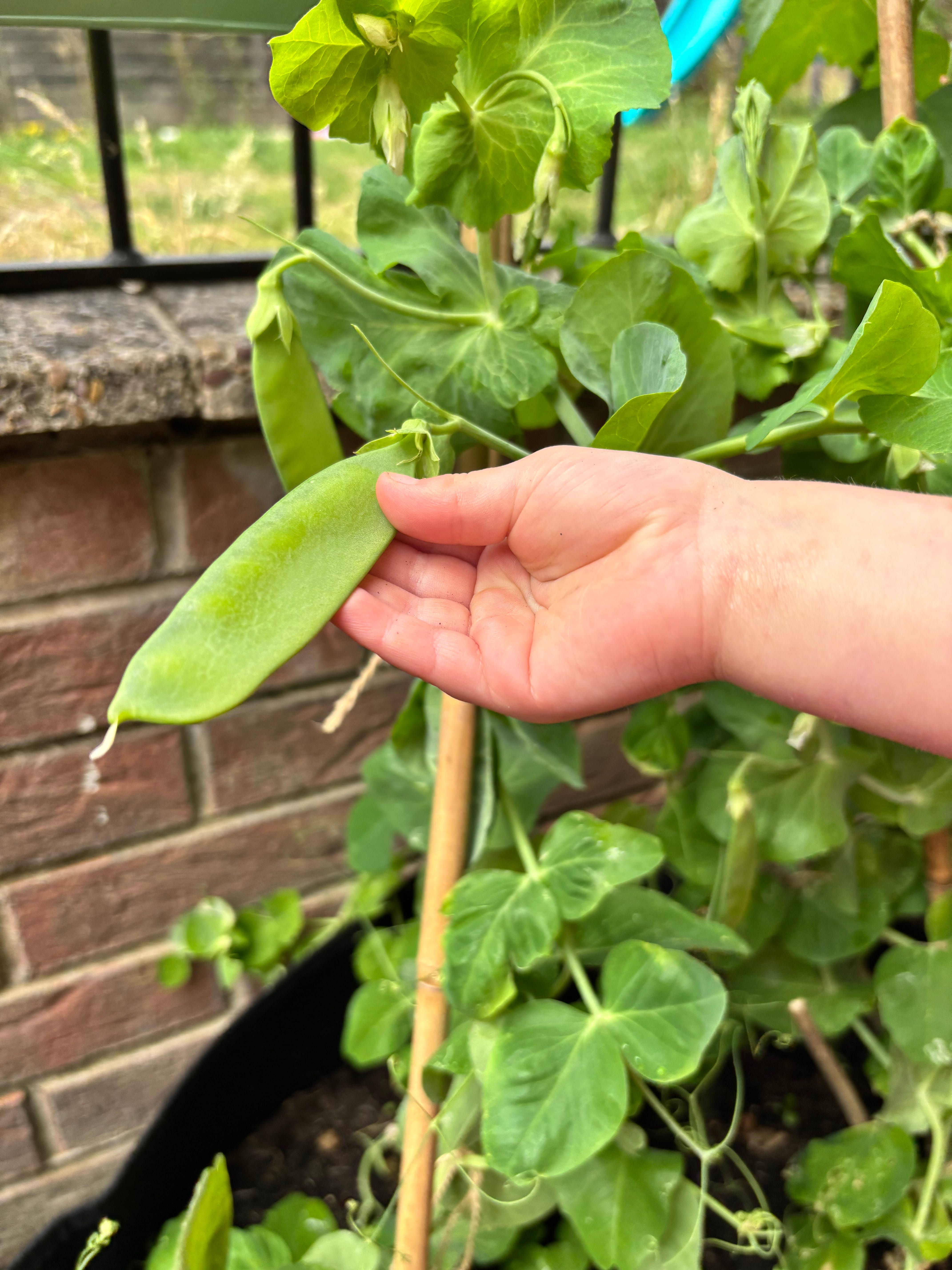
When she cradles the pod in her hand, she does so gently, as if caring for one of the myriad teddies which crowd her bed. There’s a light breeze and the early evening sun is streaking through the branches of the elderberry.
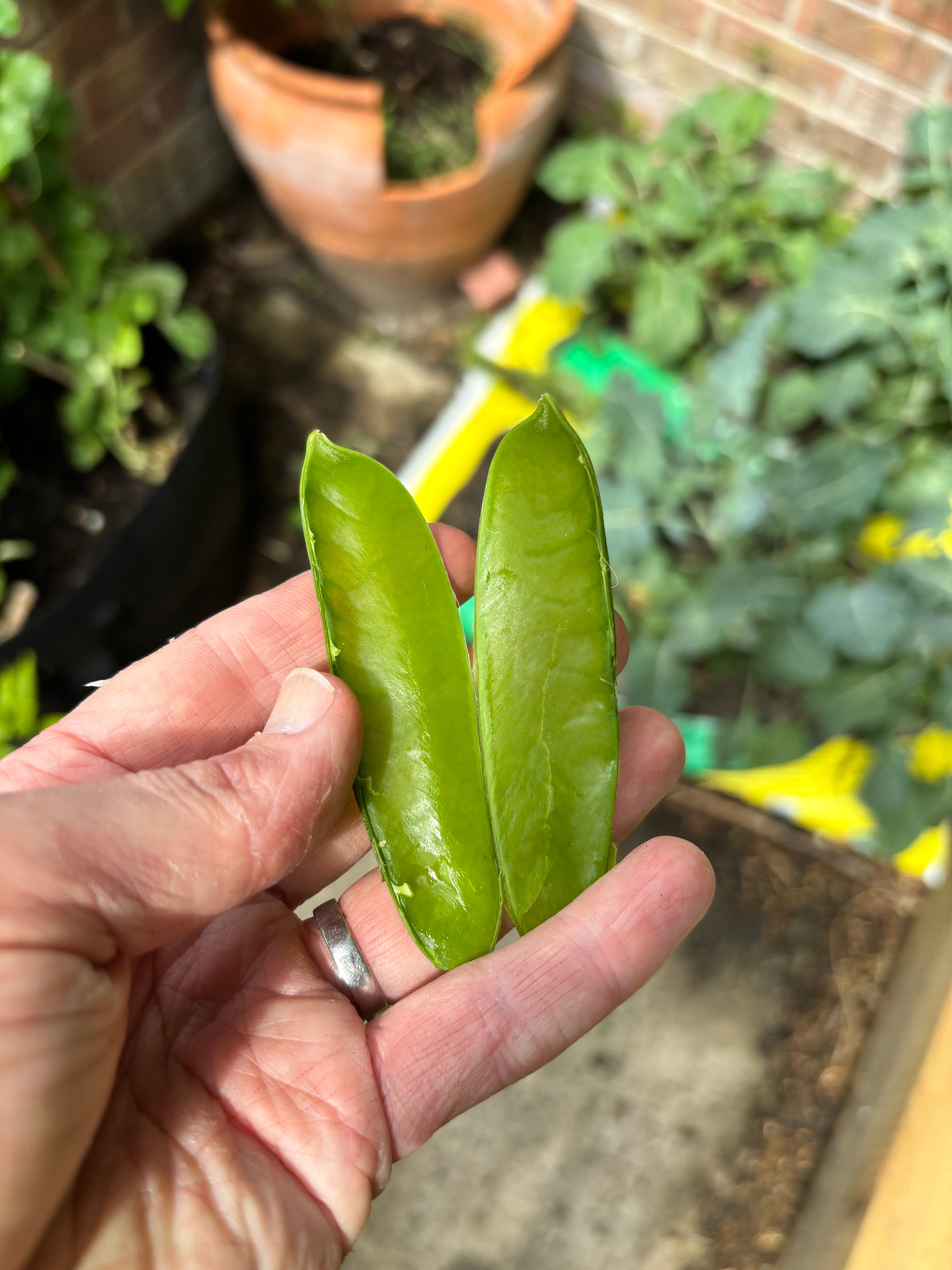
‘Do you want to pick it?’ I ask. E nods and together we give it a tug. And with that, we have harvested our first ever peas. I show her how to open it up and reveal six small specimens. I know I should have waited, they’re tiny, but the urge to eat them was too strong. We try two each and then give two to M, her brother, who’s appeared to see what all of the fuss is about.
His review? ‘Deeeeeelicious.’ He’s smiling as he’s chewing and sort of taking the piss, which makes it all the better.
From the moment I clapped eyes on the garden at the back of our home, I had vegetables on my mind. I am nothing if not predictable. 43-year old male with long term anxiety and a history of trying to turn nature into cure decides his next step should be to find solace in soil. I’ve written previously about how this time feels different. Largely as I don’t see myself wanting to become ‘the gardening guy’ as I became ‘the swimming guy’. It’s a way of staying in one place, not going out beyond in search of succour. I’m not going to try and write a book about it. I take that as progress.
My parents have had an allotment for over a decade and have long grown food in their garden. Inspiration wasn’t hard to find. Really, though, my dreams were rooted in what I have come to regard as a mystical time of half memories, a liminal space between being a toddler and a time when the past seems more solid. In many ways I have come to see this period, around the ages of four until six, as something of a golden time, a place I return to frequently whenever I want to be reminded that true happiness is rooted in simplicity, kindness, love and community.
The most specific manifestation of this is a collection of allotments bordering two housing estates (I won’t call them council estates, because where I grew up every estate was one and it wasn’t a big deal or something people in the town really gave two shits about) and some playing fields. My grandad had the plot closest to the gate, on the right of the entrance. He took it on when he retired early from the Gas Board, following its privatisation. He wasn’t downhearted by this development. A ‘true blue’ after years as a union shop steward, he was happy to have time at home.
I have a very clear sense of the space, although I haven’t returned in upwards of 25 years, despite my gran still living round the corner from it. Am uneven path of conglomerate ran down its length. Margaret from the flats had the next plot. I seem to remember someone called Rose was always on site too. To reach the allotments, my grandad always took a circuitous route, walking out of the estate and following the cycle paths behind the garages and onto the fields, rather than walking along the road. Not that I ever went by foot. My sister and I would travel in the wheelbarrow, a stainless steel affair with green handles, along with bags of compost and pots. Grandad would sing and weave wildly while we screamed with joy.
I have two abiding memories of the allotments. One was falling over and cutting my forehead open on the path, grandad carrying me home in his arms, blood everywhere and, rather than going to A&E, my gran patching me up in the garden as best she could.
The other is eating peas. In fact, I don’t remember my grandad growing much else, other than marrows, the gigantic, unloved cousin of the courgette. The peas grew adjacent to the path on neatly bound A frames. They seemed to stretch up to the sky. With his permission, I would pull the pods down and pop them open, scoffing their treasures in seconds. They didn’t ever seem to be harvested or taken home to be eaten, something I’ve only grown to understand the best part of 40 years later. Peas are the ultimate low yield vegetable. You need to grow about a hundred plants to get anything close to abundance. I have six, all of which are collapsing under their own weight.
They are, though, my absolute pride and joy. It’s closing in on 20 years since my grandad died, aged 79, from cancer. He gave up the allotment before I left primary school, although he gifted me more than just peas. An abiding love of Test cricket thanks to entire summers spent watching England get battered by all comers throughout the ‘90s. A taste for history thanks to his voracious reading habits. And an ability to spin a tale, something he was particularly adept at when telling me about his wartime years, from arriving in New York in the summer of 1944 having expected to be shipped out to Burma, to his best friend jumping behind enemy lines from the back of a plane on D Day. He was, and remains, my hero. A man who lived an ordinary life well, full of love and simplicity.
I had this moment in mind when I first popped the seeds into their trays back in April. Every stage was planned, although frying half the seedlings in the greenhouse wasn’t factored in. When E and M ate their peas it was a simple way of connecting with someone I think about constantly, doing something he loved, trying to make him proud. I may not have grown more than a small plateful’s worth. But I grew them nonetheless. For him. For me. And for the kids too.
Beautiful writing Joe x